






Express Water Filters vs Home Alternatives in 2026

Quick Summary
Shower filters and home water filters solve different problems. Shower filters reduce chlorine and odor at bath time, while reverse osmosis water filters remove dissolved solids and heavy metals from drinking water. Many households benefit from using both.
- Shower filters focus on chlorine, which you breathe in as hot water releases it.
- Reverse osmosis units suit drinking and cooking water and need pre-filters to protect the membrane.
- The 2 Rivers 1,000 GPD reverse osmosis system is priced at $899.99.
- Check certification before buying, because standard pitchers and fridge filters are not designed to remove germs.
- Shower cartridges are replaced every 3-6 months or about 12,000 gallons, whichever comes first.
Table of Contents
- Express Water Filters vs Home Alternatives: What Actually Differs
- Filtration Stages and Media: What Each Setup Removes
- Reverse Osmosis Water Filter Options Compared
- Whole House Water Filtration System Cost vs Point-of-Use Filters
- Benefits of Reverse Osmosis for Skin Health: What the Evidence Covers
- Maintenance, Cartridge Replacement, and Long-Term Cost
- Choosing Your Filter for 2026: Next Steps for Your Home
- Frequently Asked Questions
Express Water Filters vs Home Alternatives: What Actually Differs
Last Updated: November 4, 2026
Express water filters vs home alternatives is a question many households are asking in 2026, and the answer depends on what you need to remove from your water. Nourishing World has put together this comparison to help you sort through the options. Most people assume a pitcher or fridge filter does everything a whole-home unit does. It doesn't, and the gap matters for your skin.
The short version: shower filters target chlorine and odor at the point where skin meets water. Reverse osmosis targets dissolved solids and heavy metals at the kitchen tap. Neither replaces the other. According to NSF consumer research on water filter trust, 92% of filter owners are more likely to trust independently certified water filters, which makes certification one of the first things to check.
For many households, a shower filter plus a point-of-use RO unit covers the main concerns.
Filtration Stages and Media: What Each Setup Removes
Filtration works in stages, and each stage targets different contaminants. Sediment filters catch particles. Activated carbon reduces chlorine and odor. Reverse osmosis membranes remove dissolved solids. Knowing which stage does what is the fastest way to avoid paying for protection you don't need.
Shower units use a shorter stack, with media aimed at chlorine and taste. Under-sink RO systems stack more stages because they handle drinking water and must reduce total dissolved solids.
Shower filters and chlorine reduction
Shower filters focus on chlorine because it is the contaminant you come into contact with most. Hot water releases chlorine vapor, which you breathe in during a shower. Our Universal Shower Filter System uses a multi-layer design to reduce chlorine, heavy metals, and odor, and each cartridge lasts 3-6 months or about 10,000 gallons. The 2 Rivers 15 Stage Shower Filter System uses a 15-stage filtration design that helps reduce chlorine, sediment, and odors.
A shower filter will not change your drinking water.
Reverse osmosis and dissolved solids
Reverse osmosis works differently. It forces water through a semi-permeable membrane that blocks dissolved solids, heavy metals, and many chemical residues. The 2 Rivers Reverse Osmosis Water Filtration System (1,000 GPD) is a tankless design that reduces wastewater and delivers faster flow than traditional tank-based RO units.
Be realistic about scope. Common home filters, including standard pitchers and fridge cartridges, are not designed to remove germs. According to the CDC guidance on home water filters, that gap is a reason to check what a filter is certified to remove before you buy.
Reverse Osmosis Water Filter Options Compared
If you are choosing a reverse osmosis water filter, the decision usually comes down to four variables: flow rate, footprint, wastewater ratio, and how much maintenance you want. Most buying guides stop at flow rate and price. The variables that actually determine satisfaction six months in are water chemistry compatibility and waste-to-product ratio, and those are where the real differences between RO options show up.
Flow rate and recovery rate
Flow rate is the number most shoppers fixate on, but recovery rate, the ratio of product water to wastewater, matters just as much for eco-conscious buyers and for anyone on a metered water bill. The 2 Rivers Reverse Osmosis Water Filtration System (1,000 GPD) is a tankless design that reduces wastewater and provides faster flow compared to traditional tank-based RO designs.
Water chemistry compatibility
This is the variable most guides ignore. RO membrane life and rejection efficiency depend heavily on feedwater chemistry. High TDS shortens membrane life because the membrane works harder to reject dissolved solids. Hard water accelerates scaling on the membrane surface unless a scale inhibitor or softener precedes the RO stage. Chlorine degrades thin-film composite membranes, which is why a carbon pre-filter is not optional, it is what protects the membrane. If your lab report or municipal water quality report shows high hardness, high TDS, or elevated chlorine, plan on more frequent pre-filter changes and a shorter membrane lifespan than the brochure suggests.
Footprint and installation
Under-sink RO units compete for cabinet space with the disposal, cleaning supplies, and the plumbing itself. Tankless designs eliminate the pressure tank, which is often the bulkiest component, and fit more easily into compact cabinets. Measure your cabinet before you buy.
Matching the RO option to your household
Best for: Households that draw a lot of drinking water and want fast output from a compact under-sink unit, especially where cabinet space is tight. Skip if: You only need taste improvement at one faucet. A simpler carbon filter costs far less and handles chlorine and odor without the wastewater overhead.
Compare the RO unit against the shower options by what each one actually does. The RO system handles drinking and cooking water. The shower filters handle bathing water.
2 Rivers Reverse Osmosis Water Filtration System (1,000 GPD) →
Whole House Water Filtration System Cost vs Point-of-Use Filters
Whole-house filtration costs more up front because it treats every tap and shower in the home. Point-of-use filters, such as under-sink RO or a single shower unit, cost less and treat only the water you choose to filter.
Our current prices make the comparison concrete:
| Product | Type | Starting Price | Best For |
|---|---|---|---|
| 2 Rivers Reverse Osmosis Water Filtration System (1,000 GPD) | Under-sink RO | $899.99 | Drinking and cooking water |
| 2 Rivers 15 Stage Shower Filter System | Shower | $39.95 | Chlorine and softer water at bath |
| Universal Shower Filter System | Shower | $37.99 | Chlorine and odor reduction |
| 2 Rivers 15 Stage Shower Filter Replacement Cartridge | Replacement | $25.95 | Refreshing an existing shower filter |
| New Wave 10 Stage Plus Water Filter Replacement Cartridge | Replacement | $85.99 | Countertop and inline systems |
For a whole-house quote, get several written estimates from local installers and compare them against the point-of-use totals above.
Benefits of Reverse Osmosis for Skin Health: What the Evidence Covers
Reverse osmosis is often linked to skin health, but the evidence is narrower than the marketing. What RO does well is reduce dissolved solids and chlorine in drinking water. What it does not do is treat skin conditions.
The NSF research on water quality perception shows a real trust gap: only 52% of filter owners trust their home tap water. Filtering is a reasonable response, but treat claims of skin improvement as personal experience rather than proven outcome.
Maintenance, Cartridge Replacement, and Long-Term Cost
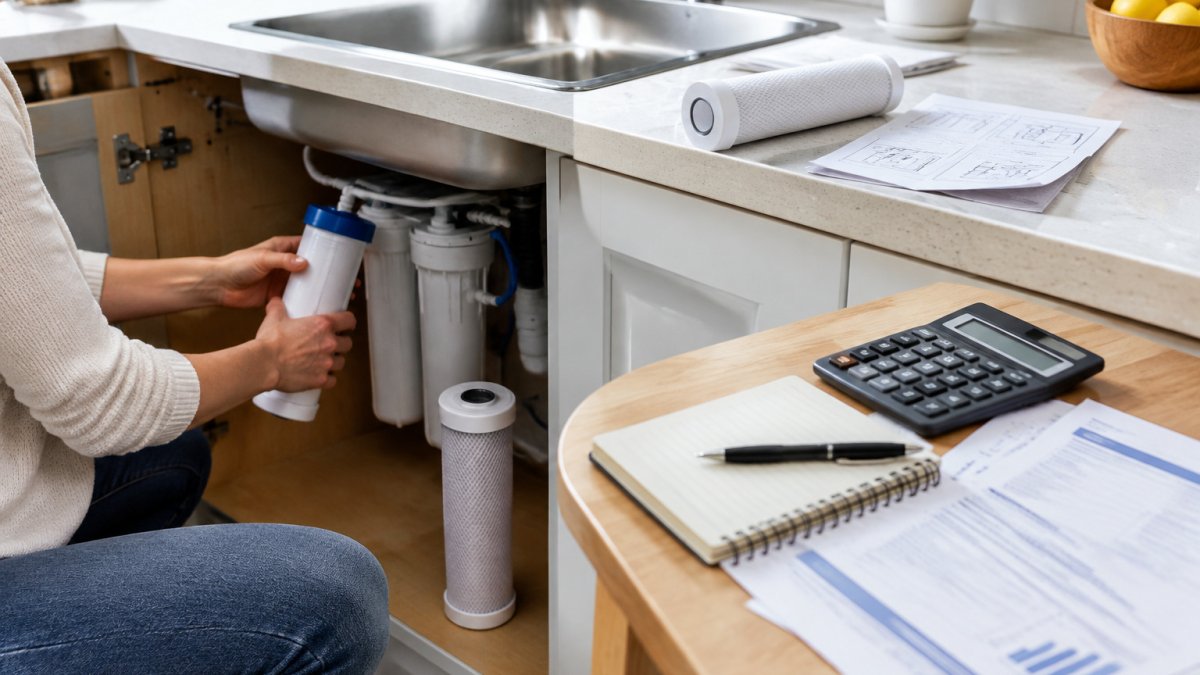
Every filter has a replacement schedule, and that schedule drives long-term cost. But the schedule on the box assumes average water. Your actual replacement interval depends on your water chemistry, your usage volume, and how well the system is installed, and that is where most maintenance budgets go wrong.
What actually shortens filter life
Sediment and carbon pre-filters bear the brunt of poor water quality. High turbidity, sediment from older pipes, or well water with visible particulate loads will clog a sediment stage well before its rated interval. High chlorine shortens carbon block life because the carbon is consumed faster. Hard water scales carbon and membrane surfaces, reducing flow and forcing earlier changes.
Shower cartridges are replaced every 3-6 months or about 12,000 gallons, whichever comes first. The 2 Rivers 15 Stage replacement cartridge is $25.95, and the New Wave 10 Stage Plus cartridge is $85.99 for roughly 1,500 gallons, usually about 12 months for a household of four. For under-sink RO, the PCT filter lasts up to a year and the RO membrane up to two, but those figures assume moderate feedwater TDS and adequate pre-filtration.
Post-installation troubleshooting: what goes wrong after six months
Most guides stop at the buy decision. The failures that actually generate service calls show up months later, and knowing them in advance saves both money and frustration.
- Pressure drop at the faucet. A slow decline in flow usually means a clogged sediment or carbon pre-filter, not a failing membrane. Replace the pre-filter first before assuming the membrane is spent.
- Leaks at push-fit connections. Push-fit fittings can weep if the tube is not cut square or is not pushed fully into the fitting. Re-seat the connection and check for a fully inserted tube before calling a plumber.
- Persistent taste or odor after a cartridge change. New carbon cartridges need a flush of several gallons before the water tastes clean. If taste persists after flushing, the cartridge may be seated incorrectly or the housing O-ring may be pinched.
- Membrane fouling on hard water. If TDS rejection drops noticeably, scaling is the likely cause. A scale inhibitor or upstream softener extends membrane life; without one, expect earlier replacement.
Budgeting for the long term
Over a year, a shower setup with quarterly cartridge changes costs far less than the RO system's initial price. The long-term question is whether you will actually replace cartridges on time. An overdue cartridge stops filtering well, so set calendar reminders when you install.
Choosing Your Filter for 2026: Next Steps for Your Home
Start with the water problem you actually have. If chlorine and odor bother you at bath time, begin with a shower filter, which is the lowest-cost change with the most immediate effect. If drinking and cooking water is the concern, add an under-sink RO system. A whole-house system makes sense only when multiple taps and showers need treatment and the budget allows it.
Check certification before you buy, and keep replacement costs in your plan. The consumer buying guidance on home water filters covers how different filter styles suit different household sizes, which is a useful next read.
To compare the options side by side, see our best home water filtration systems 2026 guide. If chlorine is your main concern, our which shower filters remove chlorine best for skin breakdown goes deeper. For the reverse osmosis option itself, view the 2 Rivers 1,000 GPD reverse osmosis system, or see the Universal Shower Filter System if a shower filter fits your needs.


Frequently Asked Questions
Are express water filters good?
Express water filters can be a practical choice for households that want chlorine and sediment reduction without a plumber. The 2 Rivers 15 Stage Shower Filter System and Universal Shower Filter System target chlorine, sediment and odour, and both install with tools or in minutes. Their performance depends on your incoming water quality, so check your local water report and replace cartridges on the schedule in each product listing, typically every 3 to 6 months. For whole-home needs or dissolved contaminants, a reverse osmosis unit usually covers more ground.
Is a reverse osmosis water filter better than a standard filter?
A reverse osmosis water filter removes a broader range of dissolved contaminants than a basic carbon or sediment filter, including total dissolved solids, heavy metals and chlorine. The 2 Rivers Reverse Osmosis Water Filtration System (1,000 GPD) uses a tankless design that frees cabinet space and supports faster water production than traditional tank-based RO units. Actual reduction depends on incoming water and installation, so test your water first if specific contaminants are your concern.
What does a whole house water filtration system cost compared with point-of-use filters?
Point-of-use filters, such as under-sink RO units or shower filters, cost far less up front and cover only the taps you choose, with the 2 Rivers Reverse Osmosis unit listed at 899.99 and shower filters from 37.99. Whole-house systems treat every outlet but require more plumbing work and higher installation costs. Compare the total cost of ownership, including cartridge replacements, before deciding which approach suits your home.
Do reverse osmosis benefits for skin health really matter?
Reverse osmosis removes chlorine and dissolved solids, which some people associate with dryness or irritation, and the 2 Rivers Shower Filter System lists skin support among its features. Research specifically linking RO-treated water to skin outcomes is limited, so treat these effects as possible rather than proven. Pairing a shower filter with cleaner drinking water is a reasonable approach if you have sensitive skin.
